

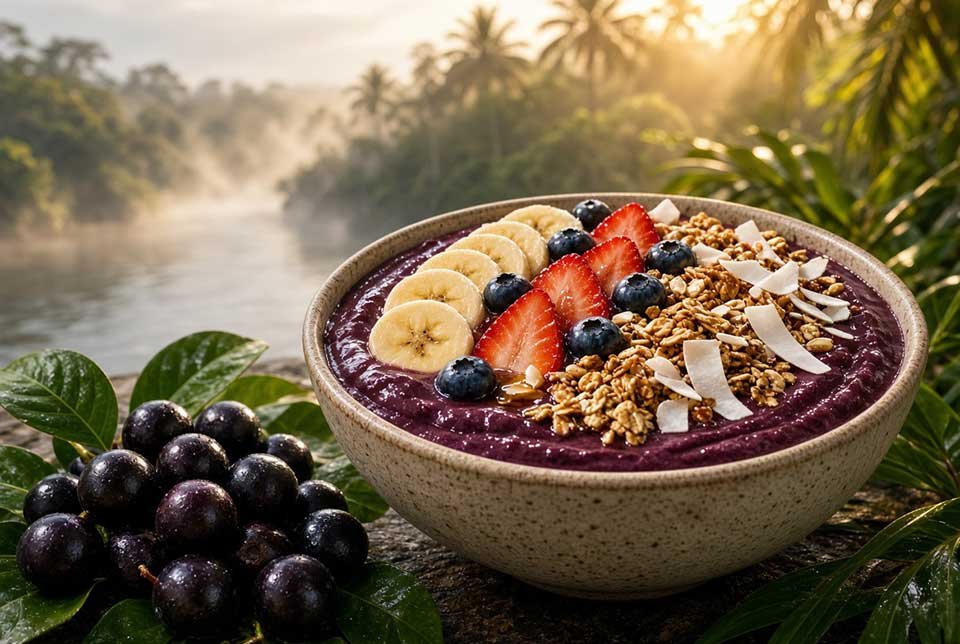
How Açaí Left the Amazon and Became a California Breakfast
In the river towns of Pará, açaí is food, not a lifestyle. Families climb Euterpe oleracea palms, knock down the dark purple fruit, soak and mash it, and eat the thick pulp with fish or farinha. The taste is earthy, almost muddy. It is calorie-dense fuel in a hot climate — not a $18 bowl with strawberries and honey.
That version of açaí still exists. The American version does not look like it.
From Belém to the juice bar
Açaí spread inside Brazil first. Migrants carried it from the Amazon to Belém and Macapá, then south. In the 1980s and 1990s, Rio’s fitness culture — including the Gracie jiu-jitsu world — turned the pulp into a sweet, frozen slush with guaraná syrup, banana and granola. Soap operas and beach kiosks did the rest. Açaí na tigela became a national snack before it became an export.
The fruit does not travel fresh. What travels is frozen pulp. In 2000, Southern California surfers Ryan and Jeremy Black and their friend Edmund Nichols tasted bowls in Brazil and founded Sambazon. They imported frozen purée, sold it door to door to juice bars in Los Angeles, then Hawaii, Florida and New York. Whole Foods and natural markets followed. The pitch was “superfood”: antioxidants, omega fats, energy. Dr. Oz-era television helped. Instagram finished the job. A purple bowl photographs better than oatmeal.
Why the United States mattered
Brazil still produces the overwhelming majority of the world’s açaí. Production in the North jumped from roughly 150,000 tons a decade ago toward nearly 2 million tons in recent official figures, as managed groves and processing plants scaled up around Abaetetuba and Belém. Most of that crop is still eaten in Brazil. Exports are the premium slice.
The United States is the main foreign buyer of that slice. USDA-linked reporting put Brazilian açaí exports at about 55,800 metric tons in 2025, with U.S. volumes hitting a record around 30,500 tons after a dip in 2023. Pulp and purée dominate; powders and supplements trail. North America has been estimated at more than a third of global açaí-berry market value. Dedicated bowl shops in the U.S. grew into a near-billion-dollar niche as chains such as Playa Bowls, Vitality Bowls and Brazil’s Oakberry multiplied storefronts. A New York bowl with toppings often runs $13 to $18.
The product Americans buy is not the Pará staple. It is sweetened, blended with other fruits, piled with granola, and sold as wellness. Frozen packets at Trader Joe’s and Whole Foods let people make the same thing at home. The berry became a format: breakfast, post-yoga, airport snack.
The gap between tree and bowl
A 14-kilo basket of raw fruit in the Amazon might fetch the harvester a modest daily wage. A single 12-ounce bowl in Manhattan can cost more than that basket’s farm-gate value per kilo would suggest. Processing — depulping, pasteurizing, freezing, shipping — is where most of the price is added. Small riparian producers remain the base of the harvest; brands and retailers capture the margin. That tension is now part of the “bioeconomy” argument Brazil makes at climate meetings: keep the forest standing by selling fruit. The economics are real and uneven.
Trade policy can move the bowl price overnight. Because almost all export pulp is Brazilian, U.S. tariffs on Brazil in 2025 briefly threatened to make a California breakfast a luxury item. Some agricultural lines were later eased; the episode still showed how thin the supply chain is. There is no second Amazon.
What “popular” means here
Açaí did not become famous in the United States as a Brazilian grocery brand. It became famous as a category. Sambazon taught juice bars the recipe. Social media standardized the look. Grocery freezers made it ordinary. Brazil kept the trees.
The fruit on the palm is still a regional staple. The fruit in the bowl is a California product that happens to grow in Pará. That translation — from river breakfast to wellness staple — is the whole story, and it is why a purple slush from the Amazon now sits next to avocado toast.


