

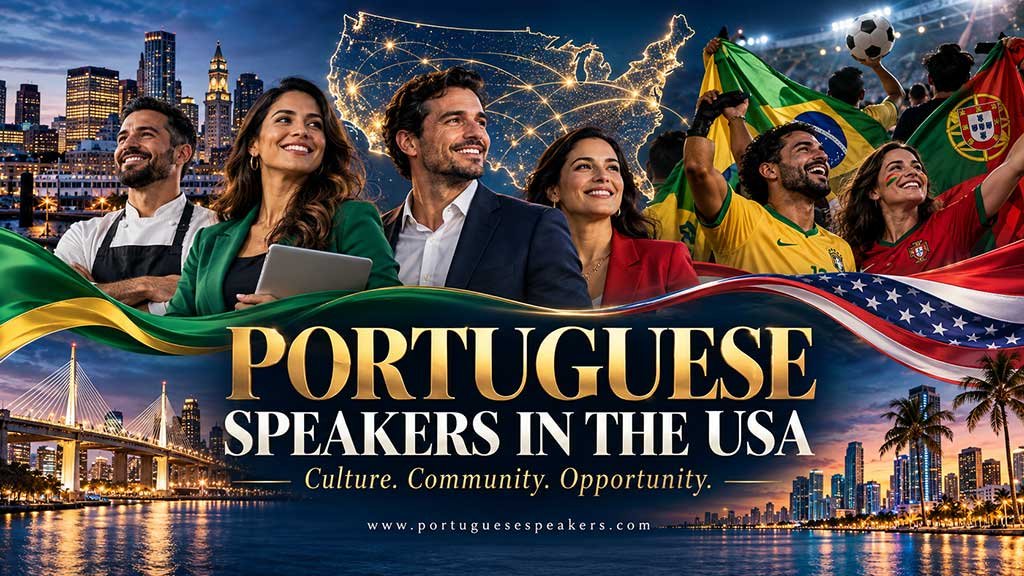
By J.R. DeOliveira PortugueseSpeakers.com
For years, Portuguese-speaking communities occupied a curious position in American marketing: visible in local business, construction, tourism, and neighborhood life, yet often overlooked in national advertising strategies.
Over the past decade, that picture has begun to change. American companies and global brands operating in the United States increasingly see an opportunity among Brazilian and Portuguese consumers—a market whose value extends beyond its population size.
These communities include entrepreneurs, professionals, business owners, and affluent households, alongside working families building their futures. Their commercial appeal comes from purchasing power, international connections, and community relationships that can turn a trusted recommendation into lasting business.
For companies seeking a way into this market, soccer has become a powerful introduction.
Soccer Opens the Door
Soccer brings together language, national identity, family traditions, and shared emotion. For many Brazilian and Portuguese fans, following a team is part of maintaining a connection with home while building a life in America.
Events and organizations such as FC Series, the FIFA World Cup, the New England Revolution, and U.S. Soccer create opportunities for brands to participate in that experience. A match can connect companies with audiences through broadcasts, hospitality, community events, and conversations that continue long after the final whistle.
The New England Revolution’s relationship with Nossa Radio USA illustrates this approach. When the club announced its Portuguese-language radio partnership, it explicitly identified engagement with Portuguese-speaking audiences as a goal. The relationship continues through broadcasts on WBIX 1260 AM.
That investment recognizes a practical truth: fans develop stronger connections with organizations that speak their language and acknowledge their culture.
Different Brands, Different Routes
From my perspective in Portuguese-language media and business development, companies have approached this opportunity through several routes.
Walt Disney World and Adidas are among the brands associated with the tourism and sports landscape that attracts these audiences. Delta Air Lines and LATAM connect with the community through travel and the enduring ties between the United States, Brazil, and Portugal. Ford and Honda reach consumers through vehicle ownership and local dealership relationships, while Western Union serves the financial connections that stretch across borders.
These companies do not all follow the same strategy or participate in the same partnerships. What connects their opportunities is the relevance of their products to everyday community life.
A family planning a trip, an entrepreneur purchasing a vehicle, or someone sending money to relatives abroad represents more than an isolated transaction. Each belongs to a network of relationships where service, familiarity, and reputation influence future choices.
Portuguese-language communication can help a brand enter that network. Consistent engagement gives it a reason to remain there.
A National Moment for Nossa Radio USA
The FIFA World Cup 2026 brought this opportunity into sharper focus.
Nossa Radio USA, a Brazilian radio network with stations in Massachusetts, Connecticut, and Florida, announced exclusive Portuguese-language radio broadcasting rights in the United States. Its nationwide coverage of Brazil and Portugal matches gave the network a significant platform for serving fans in their own language.
For advertisers, this created a meeting point between a global sporting event and community media with established local relationships.
The significance extended beyond the matches. Portuguese-speaking audiences could experience a major tournament through voices familiar with their language, culture, and expectations. Brands participating in that environment had an opportunity to become part of a shared experience.
The Opportunity Beyond the Tournament
The strongest business opportunity lies in sustaining those relationships.
A soccer campaign can introduce a brand. Continued investment in Portuguese-language media, community events, accessible service, and local partnerships can deepen the connection.
Companies should also recognize the diversity within this market. Brazilian and Portuguese consumers share a language, but their histories, preferences, and experiences differ. Effective engagement requires attention to those differences and respect for the people behind the audience figures.
The growing visibility of Portuguese-speaking America reflects something that community businesses and media have understood for years: this market has economic influence, cultural energy, and valuable relationships.
Soccer has helped bring that influence to national attention. The companies that build on it with consistent, thoughtful engagement have an opportunity to earn a place in the community’s everyday life.
Source and perspective: PortugueseSpeakers.com and J.R. DeOliveira
